
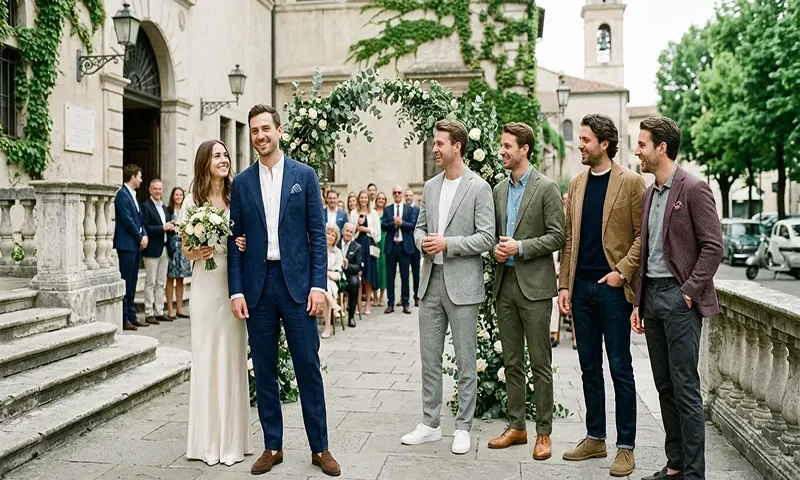
Modern Casual Men’s Suit Ideas for a Civil Wedding Ceremony
The traditional dictates of wedding attire are undergoing a quiet revolution. As the landscape of modern marriage shifts toward intimate, urban, and personality-driven civil ceremonies, the stiff, heavy-weight black-tie tuxedo is increasingly finding itself out of place. Today’s groom is looking for something different: an ensemble that reflects the solemnity of the occasion while embracing the ease of modern life. Enter the “casual-formal” aesthetic—a sophisticated balance of tailored precision and relaxed elegance.
The Philosophy of Casual-Formal
In 2026, dressing “casual” for your wedding does not mean opting for a lack of effort. On the contrary, the casual-formal aesthetic is a masterclass in intentionality. It is about elevated comfort. It prioritizes natural fibers, unstructured silhouettes, and unconventional palettes that feel authentic to you. The goal is to look like the best version of yourself, not a man playing dress-up in a rental suit that doesn’t quite fit. For a civil … Read the rest >>>