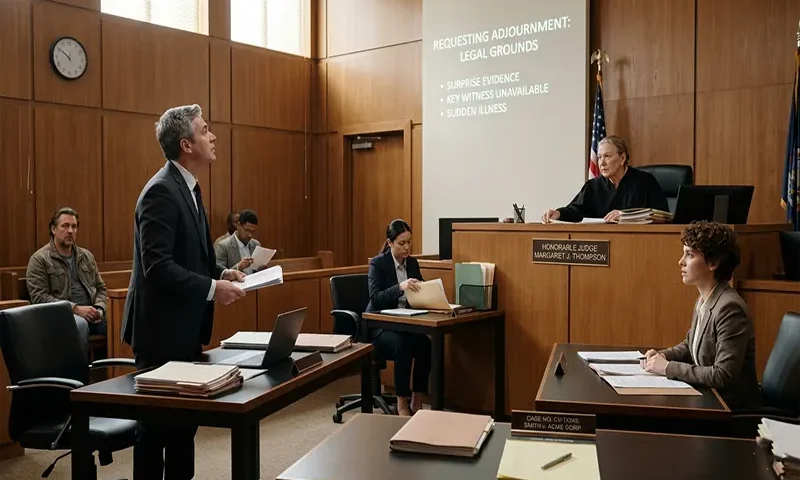
Legal Grounds to Request an Adjournment of a Civil Court Hearing

In the legal world, the phrase “justice delayed is justice denied” is more than a cliché; it is the guiding principle of the judiciary. Judges are tasked with moving cases through the system efficiently, which means they generally view requests for adjournment—formally known as a “motion for continuance”—with significant skepticism. However, life is unpredictable, and legal systems recognize that there are instances where a hearing cannot proceed as scheduled.

If you find yourself needing to request an adjournment for a civil court hearing, it is vital to understand that this is a privilege granted by the court, not a right. Success depends entirely on your ability to demonstrate “good cause.”

Valid Legal Grounds for Adjournment

A request for an adjournment must be rooted in circumstances that are beyond your control and that prevent you from effectively participating in the hearing. Common grounds accepted by courts include:

  • Medical Emergencies: A sudden,
Read the rest >>>
How to Prepare Written Evidence for a Small Claims Civil Hearing

Walking into a small claims courtroom can be an intimidating experience, but it is also one of the few legal arenas where you don’t need a law degree to succeed. In small claims court, the judge’s decision is rarely based on dramatic oratory; it is based on the weight of the evidence. Written evidence acts as the backbone of your case, providing the objective facts that support your version of the story. If you want to win, you must transition from “telling” your story to “showing” your story through organized, clear, and admissible evidence.

The Three Pillars of Written Evidence

Before you begin organizing your documents, you must categorize them. Most small claims cases rely on three types of written proof:

  1. Documentary Evidence: These are the foundational records of the transaction or dispute. This includes signed contracts, written agreements, purchase receipts, invoices, billing statements, and bank records.
  2. Correspondence: Emails, text
Read the rest >>>
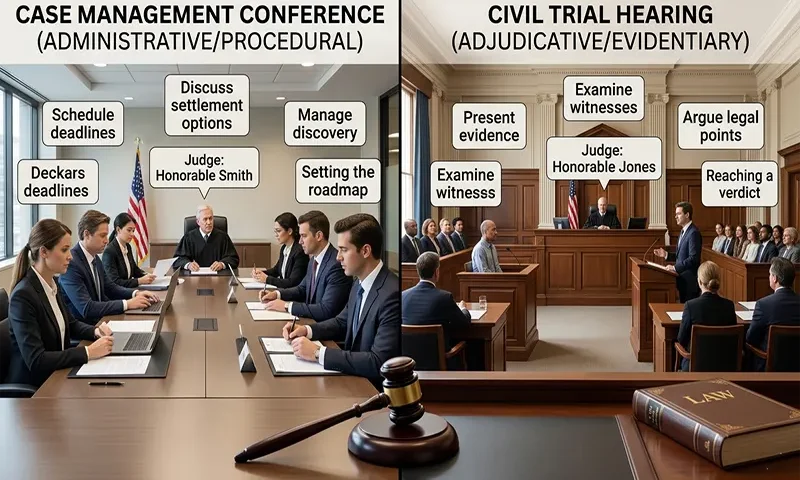
The Difference Between a Case Management Conference and a Civil Trial Hearing

Navigating the civil litigation process can feel like learning a new language. For those unfamiliar with the legal system, the terminology used by court clerks and attorneys often sounds interchangeable, yet the procedural differences between these events are significant. Two of the most common—and most distinct—milestones in a lawsuit are the Case Management Conference (CMC) and the Civil Trial Hearing. Understanding the purpose, setting, and expectations of each is essential for anyone involved in a civil dispute.

Understanding the “Roadmap” of Litigation

Civil litigation is not a single, isolated event; it is a marathon of procedural steps designed to move a dispute from an initial filing to a final judgment. Courts use various types of meetings to keep this process on track. Think of the litigation process as a roadmap: the Case Management Conference is the planning session where you determine the route and the timeline, while the Civil … Read the rest >>>

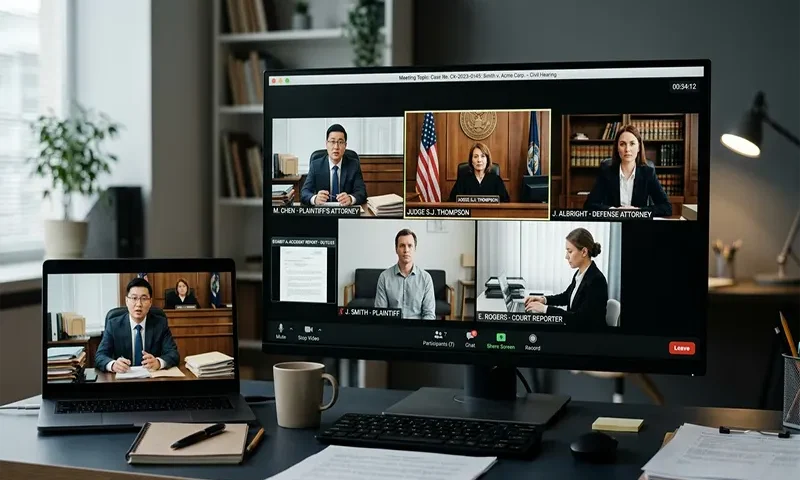
What to Expect During a Virtual Civil Court Hearing on Zoom

The transition to virtual courtrooms has been one of the most significant shifts in the modern judicial landscape. While the setting has moved from a physical mahogany-paneled room to a digital interface, the gravity, rules, and expectations of the judicial process remain unchanged. If you have a civil hearing scheduled via Zoom, it is natural to feel anxious, but understanding the mechanics of the virtual courtroom can transform your experience from a stressful tech-challenge into a structured, manageable legal proceeding.

Preparation: The “Pre-Game” Strategy

Preparation is the single most effective antidote to courtroom anxiety. In a virtual environment, your “courtroom” is wherever your camera is pointed.

Technical Setup

Your technology is an extension of your presence. A poor setup can distract from your arguments or, in extreme cases, be perceived as a lack of respect for the court.

  • Connection: Use a hardwired internet connection if possible. If you must use
Read the rest >>>
When to Call a Personal Accident Lawyer in Columbus After an Injury

Accidents can occur at the most unexpected moments — on the road, on the job, in a store, or on a peaceful sidewalk in your community. While some injuries may turn out minor, and others may heal with a little rest and time, some injuries can linger and leave effects on your body, mind, and finances. When it comes to reaching out for legal help after suffering an injury due to another’s negligence, one of the most important things that you can do is know when to do so. Knowing when to contact a personal accident lawyer Columbus can make all the difference in the outcome of your case, ensuring that your rights are protected from the outset.

If you have suffered serious injuries, that is one of the most obvious reasons to call on a personal accident lawyer. This includes broken bones, head trauma, spinal cord damage, internal injuries,

Read the rest >>>